






How to Troubleshoot Common Valve Leakage and Actuator Malfunctions in Growing Fire Systems
octubre 8, 2026
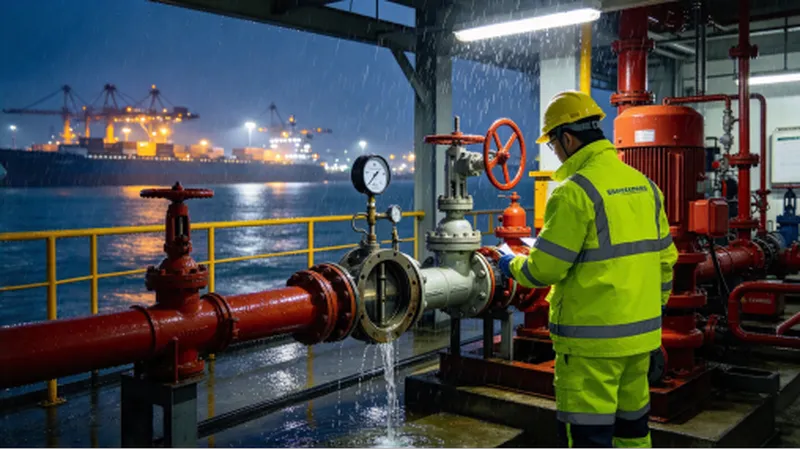
A heavy rain poured over a coastal industrial port early on a Tuesday morning. Inside the main fire pump house, an onsite engineer performed a routine system pressure audit. Suddenly, a subtle pressure drop registered on the main manifold gauge. A small, silent seat leakage in an old butterfly valve was draining pressure from the entire fire protection loop. In a real emergency, even a minor valve malfunction or delayed actuator response can compromise an entire building’s safety network.
For MEP contractors, facility managers, and safety equipment importers, maintaining reliable valve operations is critical. Furthermore, understanding how to troubleshoot common valve leakage and actuator malfunctions protects your infrastructure, ensures immediate code compliance, and preserves system longevity.
The Global Fire Safety Market: Rapid Expansion and Strong Prospects
The global fire protection and fluid control market is experiencing remarkable, steady growth. Accelerated urban industrialization, massive logistics warehouse development, and strict municipal safety mandates across South America, Europe, Australia, and the Middle East are driving unprecedented demand for reliable fire valves and automated actuators.
Industry analytics project the global fire protection valve market to expand from $11.5 billion to over $17.2 billion by 2030, maintaining a robust compound annual growth rate (CAGR) of over 6.2%.
Several key macroeconomic drivers fuel this sustainable global growth:
- Strict Building Code Enforcement: Regional building authorities strictly enforce NFPA 13 and NFPA 25 standards. Therefore, commercial properties must install verified, high-pressure fire valves to secure operating permits.
- Smart Fire Network Integration: Modern commercial hubs increasingly mandate signal butterfly valves and electric/pneumatic actuators. As a result, operators can monitor valve positions remotely in real time.
- Infrastructure Modernization: Cities across high-growth regions are aggressively replacing aging cast iron infrastructure with heavy-duty ductile iron fire valves to prevent sudden line ruptures.
This booming market presents strong commercial opportunities for safety hardware distributors. Partnering with an established manufacturer gives your buyers complete confidence in long-term supply stability.
How to Troubleshoot Common Valve Leakage and Actuator Malfunctions
Fire valves and actuators operate under harsh, high-pressure conditions. Therefore, systematic site troubleshooting helps maintenance teams resolve technical issues before catastrophic line failures occur.
1. Resolving Internal Seat Leakage and External Stem Leaks
Internal seat leakage usually occurs when debris wedging prevents the resilient wedge or disc from sealing completely.
The Solution: Flush the line thoroughly under controlled pressure to remove pipe scale. If the leak persists, inspect the EPDM rubber seal for chemical or mechanical wear and replace the wedge assembly. For stem packing leaks, adjust the gland follower bolts evenly to restore a tight seal without binding the stem.
2. Fixing Valve Actuator Malfunctions and Signal Delays
Actuators can fail to open or close due to torque misalignment, loss of power supply, or internal gear wear.
The Solution: First, check electrical wiring or pneumatic air supply pressure. Second, manually override the actuator to determine if the resistance comes from the valve stem or the gear drive. Adjust limit switches precisely so the actuator stops at the exact fully-open or fully-closed position.

Quick Reference: Fire Valve & Actuator Troubleshooting Guide
| Issue / Symptom | Potential Root Cause | Recommended Corrective Action | Primary Application |
| Internal Seat Leakage | Trapped line debris or damaged EPDM seal ring | Flush pipeline under pressure; replace resilient seat seal | Main fire risers & pump discharge |
| External Stem Seepage | Loose packing gland or worn O-ring seals | Tighten gland follower nuts evenly; replace stem O-rings | OS&Y & NRS Gate Valves |
| Actuator Fails to Drive | Voltage drop or incorrect limit switch setting | Verify power terminal voltage; recalibrate limit switches | Automated signal butterfly valves |
| High Operating Torque | Corroded stem threads or bent drive shaft | Apply food-grade lubricant; replace damaged valve stem | Heavy-duty municipal water mains |
Fluid Tech Group: Your Trusted Global Fire Valve Manufacturer
Delivering safe, compliant fire protection hardware requires a direct manufacturing partner with deep foundry expertise, advanced coating equipment, and seamless global export logistics.
Fluid Tech Piping Systems Co.,Ltd (known globally as Fluid Tech Group) is a premier fire valve manufacturer China and a dedicated exporter of total fire protection piping hardware. Through our international portal, fireprotectionaccessories.com, we engineer, cast, machine, coat, and export a comprehensive range of UL/FM-certified OS&Y gate valves, NRS gate valves, signal butterfly valves, check valves, grooved fittings, pipe hangers, and flexible sprinkler hose drops to overseas buyers across South America, Europe, Australia, and the Middle East.
Why global safety distributors partner with Fluid Tech Group:
- Direct Foundry Advantage: We operate full-scale raw casting furnaces, automated CNC lines, and electrostatic powder coating plants under one roof. Thus, we guarantee consistent metallurgical quality and fast production turnarounds.
- Full Certification Compliance: Our fire protection products carry verified UL, FM, CE, and ISO credentials. Consequently, they ensure fast site inspector approval across global markets.
- Heavy-Duty Corrosion Protection: We apply non-toxic, electrostatic Fusion-Bonded Epoxy (FBE) resin across our valve bodies to resist harsh soil acidity and continuous water contact.
- Consolidated Shipping Support: In addition, we pack valves, grooved couplings, flexible hoses, and pipe supports into single container loads (FCL), drastically cutting ocean freight charges and import clearance paperwork.

Global demand for certified fire safety hardware is rising fast. Partner with Fluid Tech Group to build a resilient supply chain, supply top-tier fire valves, and expand your regional market share.
Contact our technical sales team today to request product catalogs, factory test reports, or customized project quotations.