






How to Choose Fire Protection Piping for High-Pressure Systems
octubre 19, 2026
It is 5:30 AM on a rainy morning at a new 60-story commercial tower site in downtown Chicago. Up on the 40th floor, the mechanical installation team is running static pressure testing on the main vertical fire riser. Down in the basement, the high-pressure fire pumps kick on, sending water hammering up the shaft at over 300 PSI. Up on the scaffolding, every joint, valve bonnet, and grooved coupling holds its ground without a single drop of seepage.
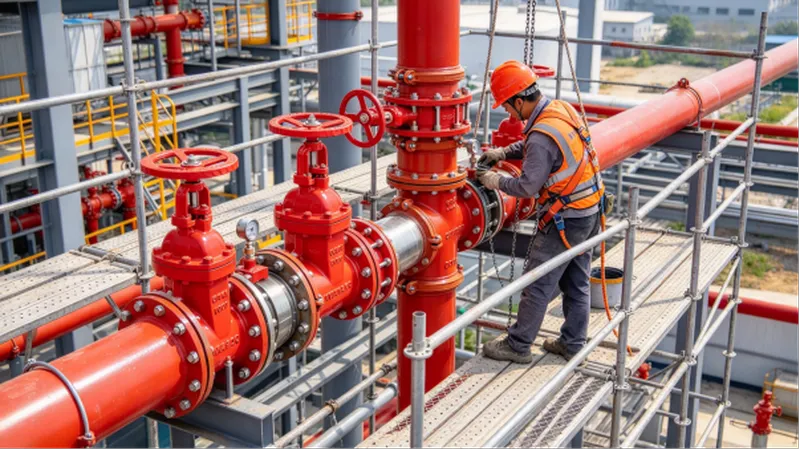
In high-rise buildings and heavy industrial plants, high-pressure fire networks operate right at the limit. When system pressure spikes, there is no margin for error. A single weak valve or cheap fitting can trigger a catastrophic failure that floods millions of dollars in equipment.
For MEP contractors, fire system designers, and safety hardware importers, getting the specification right is a matter of life and property safety. Knowing how to choose fire protection piping for high-pressure systems helps you build a system that passes municipal inspection on the first try and operates reliably for decades.
The Global High-Pressure Fire Safety Market: Big Growth and Solid Prospects
If you speak with procurement managers across the U.S., South America, Europe, or the Middle East, you hear the same message: commercial buildings are getting taller, logistics parks are getting bigger, and local fire codes are getting tougher. Because of these safety mandates, demand for heavy-duty, high-pressure rated fire piping, forged fittings, and resilient valves is booming worldwide.
Market research shows that the global fire suppression and fluid control industry will top $16 billion by 2030, growing at over 6.0% every year. On the ground, three major drivers are powering this growth:
- Strict Municipal Code Audits: City inspectors check every valve, pipe support, and fitting against NFPA 13 rules before issuing occupancy permits. They demand verified UL-Listed and FM-Approved hardware that can handle severe working pressures.
- Urban Vertical Expansion: Modern high-rise towers need high-pressure fire pump risers capable of pushing water dozens of stories into the air. This requires ductile iron and forged steel components with 300 PSI to 500 PSI working pressure ratings.
- Direct OEM Sourcing Shifts: To manage rising shipping costs and cut middleman markups, global importers are moving toward integrated manufacturers that can supply certified valves, grooved fittings, and hangers in consolidated single-container loads.
This growing market creates major opportunities for safety hardware distributors. Partnering with a direct manufacturing foundry gives your customers complete confidence in product quality and long-term supply stability.
Key Considerations when Selecting High-Pressure Fire Piping and Valves
Not all piping hardware is built to handle extreme hydraulic pressure or sudden water hammer. Here is what engineering teams evaluate when choosing hardware for high-pressure fire loops:
1. Metallurgical Strength and Pressure Ratings
For high-pressure lines, material choice comes first. Standard cast iron cannot handle the shock loads of a high-pressure fire pump startup.
- Ductile Iron vs. Forged Steel: High-pressure gate valves and grooved couplings require high-grade ductile iron (ASTM A536) or forged carbon steel. These metals offer exceptional tensile strength and flexibility, preventing body cracking under sudden pressure spikes.
- Resilient Wedge Design: OS&Y gate valves should feature full rubber-encapsulated EPDM wedges and heavy-duty stainless steel stems to guarantee bubble-tight shutoff at 300 PSI working pressure.

2. Joint Integrity and Surface Protection
Under high hydrostatic pressure, connection joints and body coatings must hold up against internal wear and environmental corrosion.
- Grooved Mechanical Joints: Rigid grooved couplings lock pipe ends securely while absorbing minor structural movement. Deep-seated EPDM rubber gaskets ensure a tight seal even when the pipe vibrates during pump testing.
- Fusion-Bonded Epoxy (FBE) Coating: High-pressure valves need electrostatic FBE resin coatings inside and out. This smooth finish reduces internal fluid friction, cuts pressure drop, and stops rust from forming inside the valve chamber.

High-Pressure Fire Protection Piping & Valve Selection Matrix
| Equipment Component | Recommended Material | Pressure Rating Standard | Key Role in High-Pressure Systems |
| OS&Y Gate Valves | Ductile Iron (ASTM A536) + Red FBE | 300 PSI to 500 PSI (UL/FM) | Pump house discharge & vertical main riser isolation; clear rising stem position |
| Signal Butterfly Valves | Ductile Iron Body + EPDM Disc | 300 PSI (UL/FM) | Compact branch line control with built-in tamper switches for fire alarm integration |
| Grooved Mechanical Couplings | Heavy Ductile Iron + EPDM Gasket | 300 PSI to 500 PSI | Joining high-rise main risers & distribution headers with rapid installation speed |
| Forged Steel Fittings | Forged Carbon Steel (ASTM A105) | Class 2000 / 3000 / 6000 | Extreme-pressure branch connections, drain ports, and gauge tap points |
Partner with Fluid Tech Group: Your Direct Foundry in China
Getting certified, heavy-duty piping hardware from overseas requires a partner who manages metallurgical quality from the raw melt all the way to the export container.
Fluid Tech Piping Systems Co.,Ltd (known globally as Fluid Tech Group) is a premier valve manufacturer China and a trusted industrial valve supplier. Operating our own specialized gate valve factory and acting as a reliable forged steel valve supplier, we engineer, cast, machine, coat, and export a complete range of UL/FM-certified OS&Y gate valves, signal butterfly valves, check valves, grooved fittings, and pipe supports to buyers across South America, Europe, Australia, and the Middle East.
Why global procurement directors trust Fluid Tech Group:
- Direct Foundry Capabilities: As a top-tier valve manufacturer China, we run our own electric melting furnaces, automated CNC machining lines, and electrostatic FBE coating plants under one roof. That means strict quality control and direct factory pricing for your business.
- Full Certification Peace of Mind: Our fire protection products carry genuine UL, FM, CE, and ISO approvals. As a result, job-site sign-offs are smooth and hassle-free for your contractors in any overseas market.
- Consolidated Shipping Support: As a comprehensive fire valve manufacturer, we pack valves, grooved couplings, forged fittings, and pipe hangers into single container loads (FCL), cutting sea freight charges and simplifying customs paperwork.
- Complete Quality Verification: Every export order comes with full mill test certificates, chemical analysis logs, and 100% hydrostatic pressure test reports.
Global demand for high-pressure fire safety hardware is growing fast. If you want to strengthen your supply chain, secure reliable hardware, and grow your regional market share, let’s work together.
Ready to upgrade your high-pressure fire valve inventory? Contact our technical sales engineering team today to request a free engineering consultation and claim complimentary product samples for your upcoming project evaluations!